Osaka Budget Guide 2026: The Cheapest Major City in Japan — Stay, Eat, Day Trips Under ¥7,000/Day
The 2026 budget traveler's guide to Osaka — Japan's cheapest major city at ¥7,000/day. Where to stay (Namba/Shinsekai/Tennoji), what to eat for under ¥1,000, free things, day trips to Kyoto/Nara/Kobe, and a 3/5/7-day Osaka itinerary.
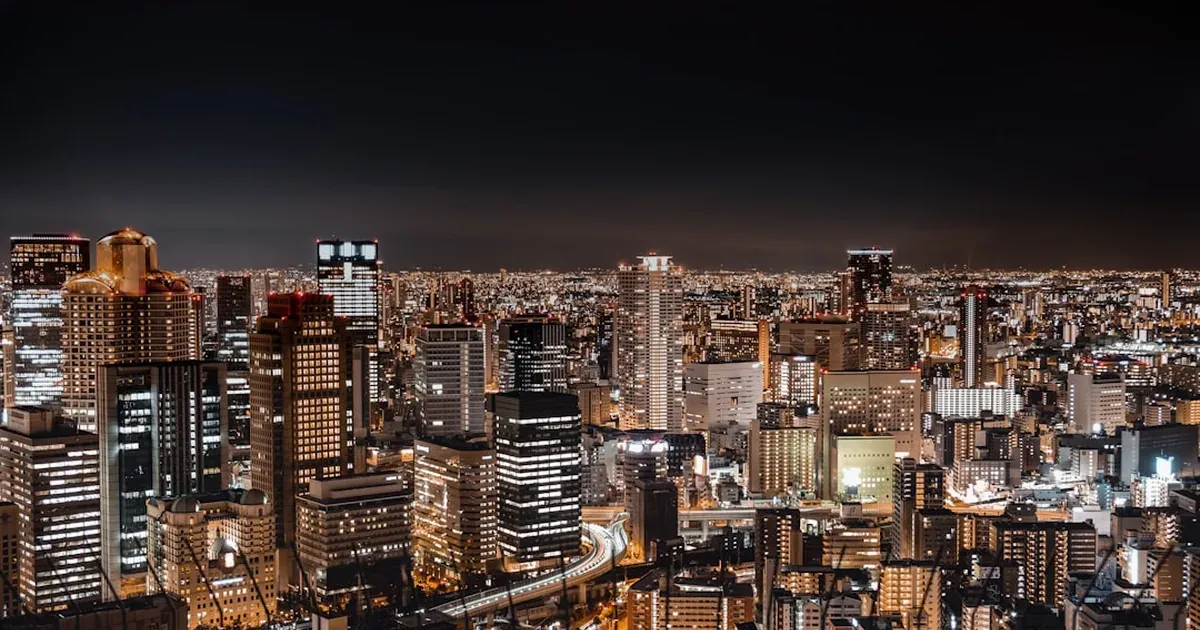
The short answer: Osaka is the cheapest of Japan’s three major cities. Daily costs run ¥6,500–8,500 for budget travelers (vs ¥8,500–12,000 in Tokyo and ¥7,500–10,000 in Kyoto). Hostels in Namba/Shinsekai are ¥2,500–3,500, the street food in Dotonbori is ¥200–800 per item, most top sights are free (Osaka Castle Park, Sumiyoshi Taisha, Dotonbori walk), and the day-trip network to Kyoto/Nara/Kobe/Himeji is the best in Japan. Plan ¥7,000/day total or ¥50,000 for a 7-day Osaka-based trip.
Osaka is Japan’s most underrated city for budget travelers. The reputation is “loud, food-obsessed, not as pretty as Kyoto” — and all three are true. The trade-off: Kyoto prices for 80% of the experience, the best street food in Japan (Dotonbori, Shinsekai, Kuromon Market), and the most central day-trip base of any major city.
Most first-time Japan travelers do Tokyo → Kyoto → Tokyo. The optimized budget route is Tokyo → Osaka → day trips to Kyoto/Nara/Kobe. Osaka has the cheaper accommodation, the better food, and the same (better, actually) day-trip access to Kansai. This guide covers why Osaka wins on budget, where to stay, what to eat, the free experiences, and the 3/5/7-day Osaka itinerary.
Why Osaka Wins on Budget (Vs. Tokyo and Kyoto)
The cost math, based on 2026 prices for a budget traveler:
| Category | Tokyo | Kyoto | Osaka | Osaka savings |
|---|---|---|---|---|
| Hostel dorm (per night) | ¥3,500–5,000 | ¥3,200–4,500 | ¥2,500–3,500 | 25–30% cheaper than Tokyo |
| Capsule hotel (per night) | ¥3,800–5,500 | ¥4,000–5,500 | ¥3,200–4,500 | 15–20% cheaper |
| Standing lunch | ¥450–600 | ¥500–800 | ¥350–500 | 20–30% cheaper |
| Street food (per item) | ¥200–500 | ¥300–600 | ¥150–400 | Often the same, sometimes cheaper |
| Izakaya dinner | ¥1,500–3,000 | ¥1,500–3,000 | ¥1,200–2,500 | 20% cheaper |
| Day trip to Nara | — | — | ¥720 round-trip | Only Osaka has direct Nara access |
| Day trip to Kyoto | ¥8,500+ Shinkansen | — | ¥720 round-trip | 90% cheaper from Osaka |
| Daily total (budget) | ¥8,500–12,000 | ¥7,500–10,000 | ¥6,500–8,500 | 25–30% cheaper than Tokyo |
The Osaka advantage for Kansai exploration: Kyoto is 30 minutes from Osaka by JR (¥580 one-way). Nara is 45 minutes (¥720 round-trip). Kobe is 25 minutes (¥410). Himeji is 60 minutes (¥1,470). If you base yourself in Tokyo, the same day trips cost 5–10x more.
The Osaka disadvantage: Less “iconic” than Kyoto (fewer UNESCO temples, fewer postcard images). If your priority is temples and traditional Japan, Kyoto is the better base. If your priority is budget + food + day trips, Osaka wins.
For the broader Japan cost picture, see the Japan trip cost 2026 guide and the Japan budget guide.
Getting to Osaka
Three options depending on where you’re coming from:
From Tokyo (most common entry point):
- Shinkansen (Nozomi) — 2h 30min, ¥8,900 one-way. Fastest but most expensive.
- Shinkansen (Hikari) — 2h 50min, ¥8,900 one-way. Same price, slightly slower.
- Highway bus (Willer, JR Bus) — 8–9 hours, ¥3,500–6,500. Cheapest, only worth it for night buses.
- Domestic flight (Peach, Jetstar) — 1h 15min, ¥4,000–8,000. Often cheaper than Shinkansen.
For the full Tokyo → Osaka comparison, see the Tokyo to Kyoto budget guide — the same transit strategies apply, and Kyoto is just one stop past Osaka.
From Kansai International Airport (KIX):
- Nankai Rapi:t — 40 minutes to Namba, ¥1,490. Fastest.
- JR Haruka — 50 minutes to Tennoji, ¥3,420 (covered by JR Pass).
- Limousine bus — 60–90 minutes to major hotels, ¥1,800–2,500.
From Kyoto:
- JR Special Rapid — 30 minutes, ¥580. The default choice.
- Keihan — 50 minutes to Yodoyabashi, ¥420. Cheaper, slightly slower.
For IC card usage (Suica, ICOCA, Pasmo) on all these routes, see the IC card guide.
Where to Stay: Namba, Shinsekai, Tennoji, Umeda
For the full neighborhood-by-neighborhood breakdown — including Den Den Town and Nakatsu — see the Osaka neighborhoods guide.
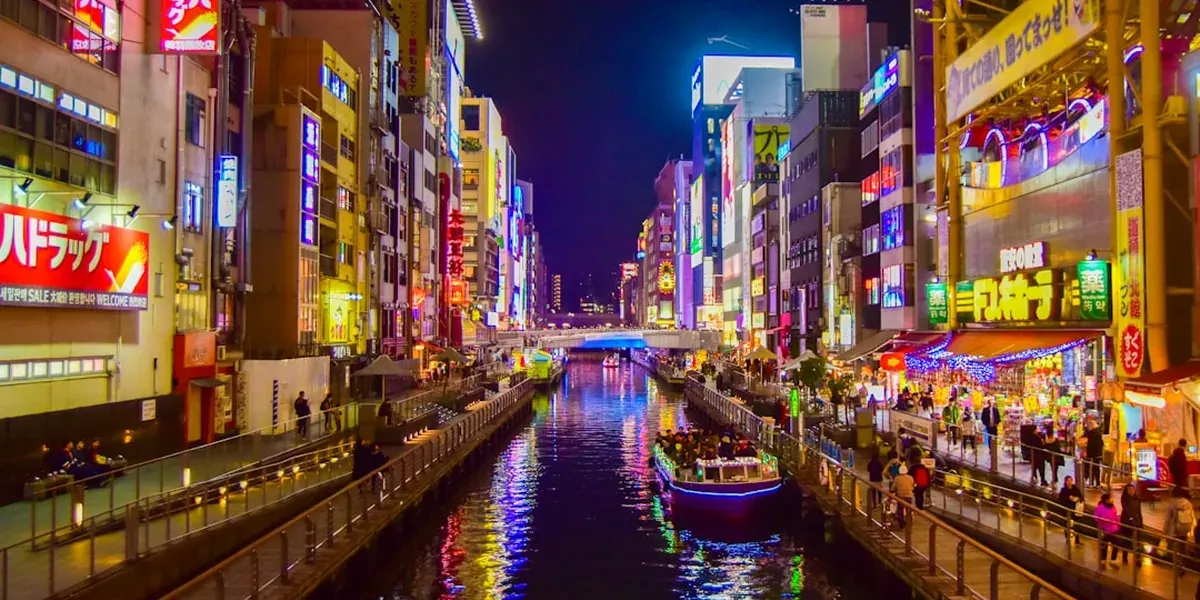
Osaka has 4 main areas to stay, each with a different price profile and vibe. Pick based on your priorities:
Namba — The Default Budget Pick
The vibe: Where Dotonbori, Shinsaibashi, and the Kuromon Market converge. The most central location, the most hostels, the most restaurants, the most transit options.
Where to stay:
- Hostels: J-Hostel Namba — ¥2,500–3,500. The Stay Namba — ¥3,000–4,200. Namba Cottage — ¥2,800–3,800.
- Capsule hotels: First Cabin Namba — ¥3,200–4,500. Cabin & Capsule Hotel J-Ship — ¥2,800–4,000.
- Business hotels: Hotel Granvia Namba — ¥7,000–10,000. Dormy Inn Premium Namba — ¥8,500–12,000.
For the full booking strategy, see the hotel booking guide and the Tokyo neighborhoods guide (the same logic applies — central for transit, Asakusa-equivalent for budget).
Shinsekai — The Cheapest, Most Local Area
The vibe: Retro Osaka. The Tsutenkaku Tower anchors the neighborhood. The food is the cheapest in central Osaka (kushikatsu, kujiuri, doteyaki). The vibe is “Osaka in the 1950s” — locals, not tourists. Tennoji is 1 stop north.
Where to stay:
- Hostels: Backpackers Hotel Toyo — ¥2,500–3,500 (the original Osaka backpacker hostel).
- Business hotels: Hotel Sunplaza — ¥6,000–8,000. Spa World capsules — ¥3,000–4,500 (with onsen access).
Why Shinsekai wins: Hostels are 20–30% cheaper than Namba. The food is the cheapest in central Osaka. The transit to Tennoji, Namba, and the day trips is fast. The downside: less central, fewer English signs.
Tennoji — The Quiet Transit Hub
The vibe: The JR/Subway hub for southern Osaka. Tennoji Zoo, Abeno Harukas (Japan’s tallest skyscraper), Shinsekai walking distance, Shitenno-ji Temple (the oldest official temple in Japan, founded 593 AD).
Where to stay:
- Hostels: Tennoji Lodge — ¥2,800–4,000.
- Business hotels: Tennoji Washington Hotel — ¥6,500–9,000. Hotel Trusty Osaka Abeno — ¥7,500–10,000.
Why Tennoji wins: Best JR access (the Osaka Loop Line is here). Close to Shinsekai. Abeno Harukas has the best Osaka skyline view (¥1,500). Less crowded than Namba.
Umeda — The Business / Modern Area
The vibe: Skyscrapers, department stores, the Yodogawa river walk. Less “Osaka character,” more “modern Japan.” More expensive than Namba.
Where to stay:
- Business hotels: Hotel Granvia Osaka — ¥9,000–13,000. Hilton Osaka — ¥18,000–28,000.
- Hostels: The 48 Osaka — ¥3,500–5,500.
Why Umeda wins: Best for business travelers, near the bullet train station (Shin-Osaka). Worst for budget travelers — 30–40% more than Namba for similar quality.
For the same neighborhood decision logic in Tokyo, see the Tokyo neighborhoods guide.
Where to Eat Under ¥1,000 — The Best Street Food City in Japan
Osaka is called “Japan’s Kitchen” (天下の台所, tenka no daidokoro) for a reason. The okonomiyaki, takoyaki, kushikatsu, and kujiuri are the best in Japan — and the cheapest. Three neighborhoods anchor the food strategy:
Dotonbori — The Iconic Food Street
The neon-lit canal street is the most photographed food strip in Japan. The food is good but tourist-priced. The actual best values:
- Takoyaki (¥400–600) — octopus balls, the Osaka specialty. Try Wanaka (¥500, 8 pieces) or Aizuya (¥600, the original).
- Okonomiyaki (¥800–1,500) — savory cabbage pancake. Mizuno (¥1,000, the most famous) or Fukutaro (¥900, with modern toppings).
- Kushikatsu (¥150–300 per skewer) — deep-fried skewers. Daruma (¥200/skewer, the original).
- Kujiuri (¥500) — hand-cut fresh udon, served hot or cold.
- Yakitori (¥200/skewer) — grilled chicken skewers, beer-friendly.
The honest Dotonbori truth: Half the restaurants are tourist traps. Walk 1 block off the main street and prices drop 30%. The same takoyaki is ¥400 on the main strip and ¥300 one block over.
Shinsekai — The Cheapest, Most Local
Shinsekai (“New World”) was built in 1912 to mimic New York and Paris. The result is a uniquely retro Japanese neighborhood that has resisted modernization. The food is the cheapest in central Osaka.
- Kushikatsu — the specialty. Try Daruma (¥200/skewer) or Yaekatsu (¥250, with house-made sauce).
- Doteyaki — beef tendon stew, ¥500 at Yaekatsu.
- Eel bowls — try the unagi at Kanidoraku (¥1,500 set lunch).
- Takoyaki — cheaper than Dotonbori (¥300–400 at Yamachan, the original).
- Standing bar food — ¥100–300 per snack at the standing bars under the Tsutenkaku Tower.
For more on the food, see the Kyoto to Osaka street food guide and the convenience store food guide.
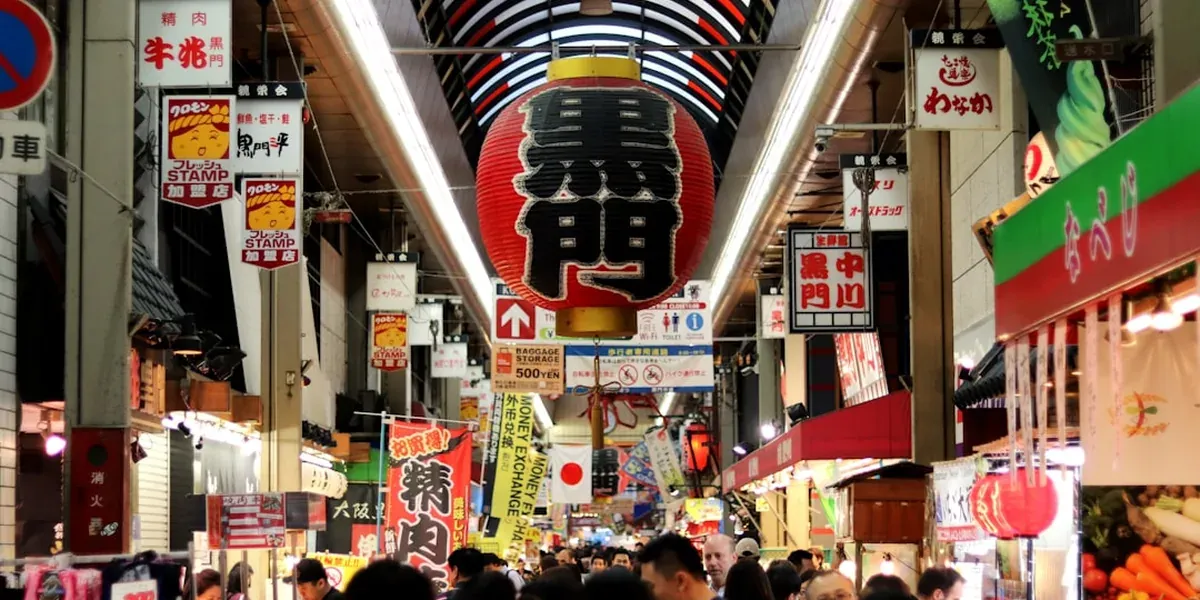
Kuromon Market — The “Osaka Kitchen”
The 580-meter covered market is “Osaka’s Kitchen” (the original meaning of tenka no daidokoro). Fresh seafood, tamagoyaki, fruit, and street food. The best breakfast stop in Kansai.
- Tamagoyaki — Japanese omelette on a stick, ¥100–200.
- Fresh seafood bowls — uni (sea urchin) don for ¥1,500, tuna don for ¥800.
- Grilled scallops — ¥500 each.
- Strawberry daifuku — ¥300 for 3 pieces.
- Fresh fruit — ¥500 for a serving of premium Japanese strawberries.
The Kuromon honesty: The “fresh seafood bowl for ¥1,500” is a tourist photo trap for the ¥800 tuna bowl is the actual deal. Walk to the end of the market (away from the entrance) for the cheaper stalls.
For the vegan food angle (Osaka has fewer vegan spots than Tokyo or Kyoto), see the vegan budget guide.
Free Things to Do in Osaka
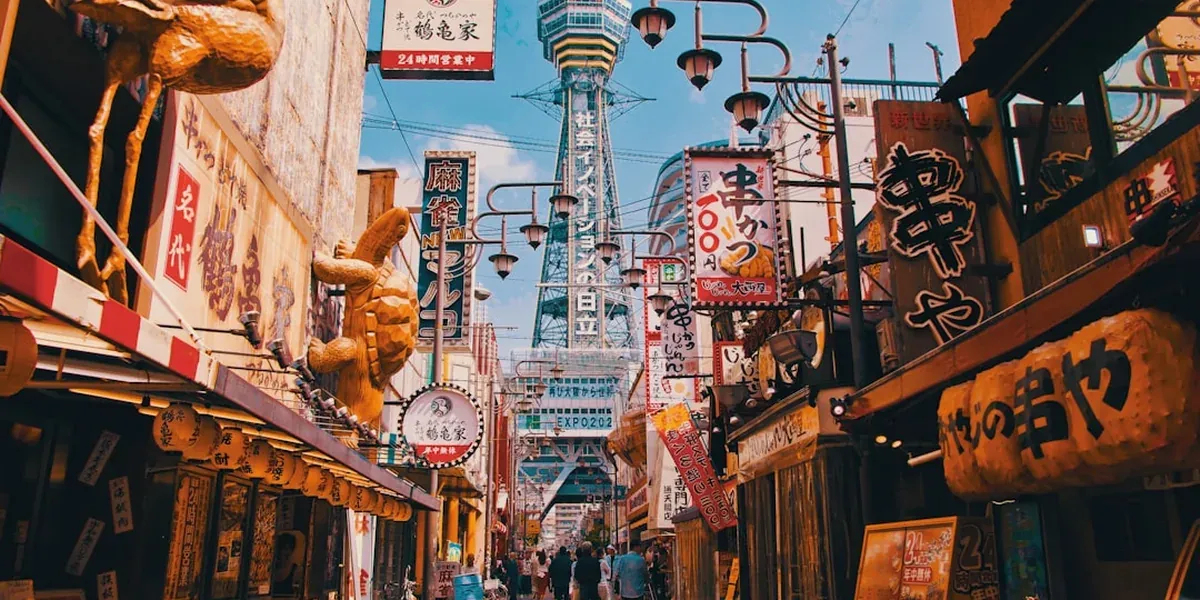
Osaka has more free experiences per square kilometer than Tokyo or Kyoto. The complete free-things list is in the free things to do in Osaka guide — the highlights:
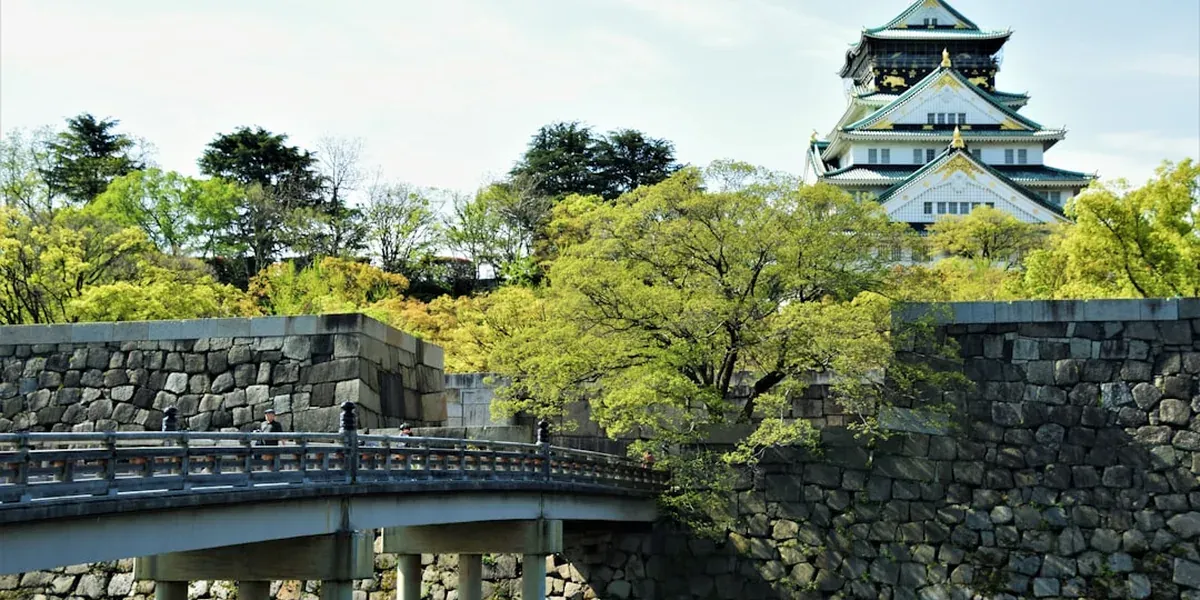
- Osaka Castle Park — 105 hectares of park, cherry trees, free outer moat walks. Castle interior is ¥600.
- Dotonbori walk — free, the neon canal at night is the iconic Osaka image.
- Sumiyoshi Taisha — one of Japan’s oldest shrines (founded 211 AD), free entry.
- Shinsekai walk — free, the retro neighborhood under Tsutenkaku.
- Tenjinbashisuji Shopping Arcade — Japan’s longest covered shopping street (2.6 km), free to walk.
- Nakanoshima Park — riverside park between Umeda and Namba, free.
- Hozenji Yokocho — stone-paved alley off Dotonbori, free to wander, ¥300 for a coin toss at the moss-covered Hozenji Temple.
- Osaka night views — Abeno Harukas observation deck costs ¥1,500; the free alternative is the Umeda Sky Building’s “Floating Garden” approach (free from the ground level).
For the full Tokyo and Kyoto equivalents, see the free things to do in Tokyo and the free things to do in Kyoto guides.
Day Trips from Osaka — The Best in Japan
The single biggest advantage of basing in Osaka is the day-trip network. Five day trips within 1–2 hours, all cheaper than from Tokyo:
Nara (45 minutes) — The Deer Park
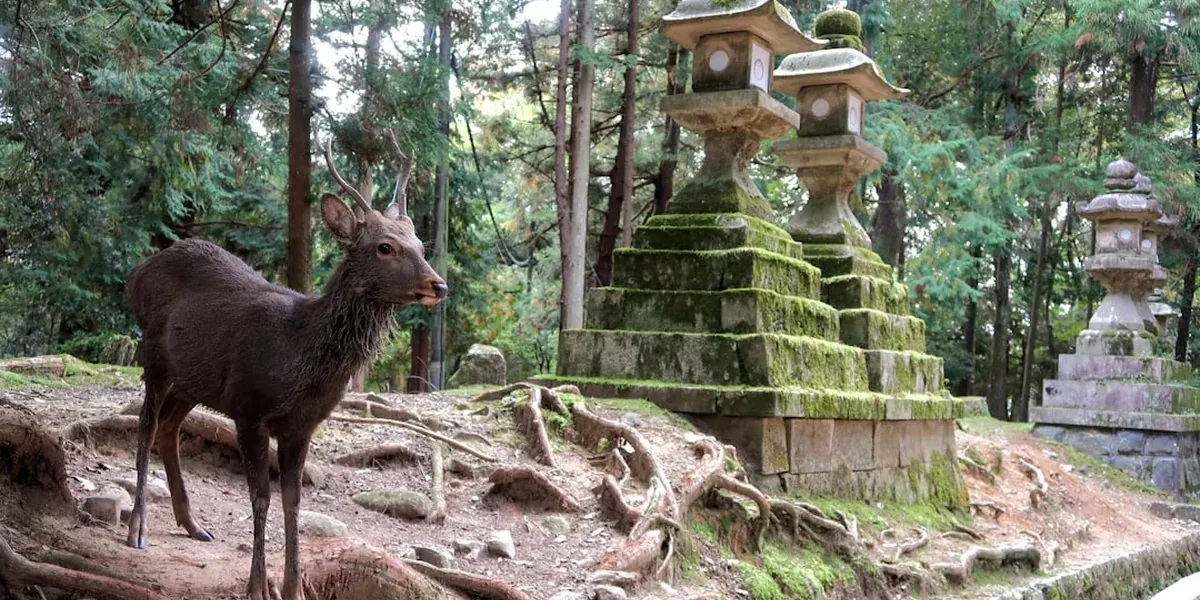
- Transport: JR Yamatoji Line from Tennoji, 45 min, ¥720 round-trip
- Cost: Free to walk Nara Park, ¥600 for Todai-ji Great Buddha Hall
- Highlights: 1,200 friendly deer, Todai-ji (one of Japan’s largest wooden buildings), Kasuga Taisha shrine (3,000 stone lanterns)
The full Nara guide is at Nara day trip budget guide.
Kyoto (30 minutes) — The Cultural Capital
- Transport: JR Special Rapid from Osaka Station, 30 min, ¥580 each way
- Cost: Free temples (Yasaka, Heian Shrine outer), ¥500–1,500 for the famous ones (Kinkaku-ji, Kiyomizu-dera, Fushimi Inari)
- Highlights: 17 UNESCO World Heritage Sites, the most traditional Japan atmosphere, autumn foliage and cherry blossom
For the Kyoto breakdown, see the Tokyo to Kyoto guide (same logic, different direction).
Kobe (25 minutes) — The Beef + Harbor
- Transport: JR Special Rapid from Osaka, 25 min, ¥410 each way
- Cost: Free harbor walks, ¥3,000–8,000 for Kobe beef
- Highlights: Kobe beef (the original), the harbor area (Kobe Port Tower, Meriken Park), the Kitano district (foreign settlement)
Himeji (60 minutes) — The Castle
- Transport: JR Special Rapid from Osaka, 60 min, ¥1,470 round-trip
- Cost: ¥1,000 for Himeji Castle interior
- Highlights: Japan’s most beautiful original castle (UNESCO), Koko-en Garden (¥1,000 combined ticket), the castle is more impressive than Osaka Castle
Wakayama / Koyasan (90 minutes) — The Mountain Temple
- Transport: JR to Koyasan, 90 min, ¥2,400 round-trip
- Cost: Free temple walks, ¥2,000–4,000 for temple lodging
- Highlights: Koyasan (Mt Koya), the headquarters of Shingon Buddhism, 117 temples, the famous Okunoin cemetery
For hiking opportunities near Osaka, see the hiking budget guide.
Where to Stay — Hostel & Capsule Recommendations
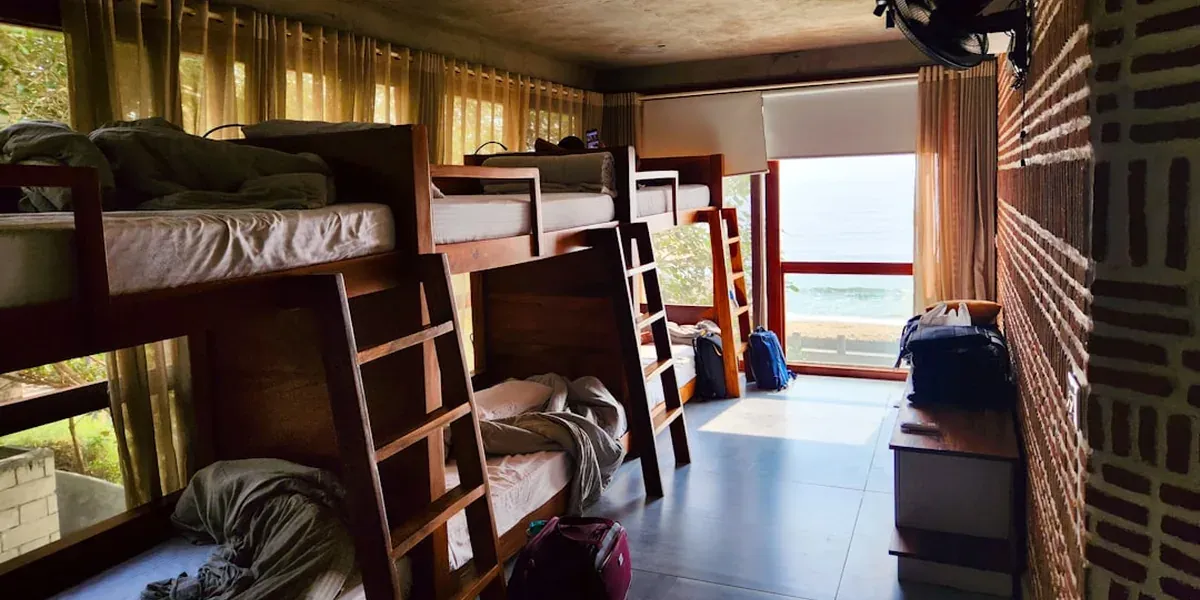
The best Osaka hostels for budget travelers:
| Hostel | Area | Dorm price | Why it’s good |
|---|---|---|---|
| Backpackers Hotel Toyo | Shinsekai | ¥2,500–3,500 | The original Osaka backpacker hostel, walking distance to Tsutenkaku |
| J-Hostel Namba | Namba | ¥2,500–3,500 | Modern, central, near Dotonbori |
| The Stay Namba | Namba | ¥3,000–4,200 | Design-focused, near Kuromon Market |
| Namba Cottage | Namba | ¥2,800–3,800 | Cozy, near Dotonbori |
| Tennoji Lodge | Tennoji | ¥2,800–4,000 | Quiet, near transit hub |
| The 48 Osaka | Umeda | ¥3,500–5,500 | Modern, central, slightly more expensive |
| Imano Osaka Hostel | Shinsaibashi | ¥3,000–4,500 | Modern, central, rooftop |
Capsule hotels (also strong in Osaka):
| Capsule hotel | Area | Price | Why it’s good |
|---|---|---|---|
| First Cabin Namba | Namba | ¥3,200–4,500 | ”First class” cabins, slightly more private |
| Cabin & Capsule Hotel J-Ship | Namba | ¥2,800–4,000 | Budget, central |
| Spa World capsules | Shinsekai | ¥3,000–4,500 | Onsen access included, the best value in Osaka |
For capsule hotel etiquette and full platform comparison, see the hotel booking guide and the budget accommodation guide.
Getting Around Osaka — IC Cards and Subway Passes
The 3 tools you need:
-
IC card (ICOCA, Suica, or Pasmo) — tap on, tap off. ¥500 deposit, ¥1,500 minimum add. Works on every subway, JR train, and most buses. For the digital ICOCA option (Apple Wallet), see the IC card guide.
-
Osaka Metro 24-hour ticket — ¥820 for unlimited Metro rides in 24 hours. Worth it after 4+ rides in a day.
-
Osaka Amazing Pass — ¥2,800 for 1 day (¥3,600 for 2 days) — unlimited Metro + JR + free/discounted entry to 40+ attractions including Osaka Castle, Tsutenkaku, and the river cruise. Best value if you take 4+ rides AND visit 2+ paid attractions.
For app-based transit (NAVITIME, Google Maps), see the travel apps guide.
The Osaka subway layout: Two operators — Osaka Metro (M lines, 9 lines) and JR (the Loop Line and Yamatoji Line). IC cards work on both. The Metro is more useful for tourists; the JR Loop Line hits Osaka Station, Tennoji, Namba (via walk), and Universal Studios Japan.
The 3-Day / 5-Day / 7-Day Osaka Itineraries
| Day | 3-day itinerary | 5-day itinerary | 7-day itinerary |
|---|---|---|---|
| 1 | Namba + Dotonbori walk (free, see free things) | Namba + Dotonbori | Namba + Kuromon Market breakfast + Dotonbori |
| 2 | Osaka Castle + Shinsekai | Osaka Castle + Shinsekai | Osaka Castle + Tennoji + Shitenno-ji |
| 3 | Day trip: Nara deer | Day trip: Nara | Day trip: Nara deer park + Todai-ji |
| 4 | — | Day trip: Kyoto temples | Day trip: Kyoto (Fushimi Inari + Kiyomizu-dera) |
| 5 | — | Day trip: Kobe beef lunch | Day trip: Kobe harbor + Kitano district |
| 6 | — | — | Day trip: Himeji Castle |
| 7 | — | — | Universal Studios Japan OR Koyasan overnight |
The base strategy: Stay in Namba or Shinsekai for all three itineraries. Namba for central access, Shinsekai for budget.
The Universal Studios Japan (USJ) day: USJ is in Osaka Bay, 30 min by JR from Namba. Day tickets are ¥8,600–10,000 (vs Tokyo Disney at ¥7,900–10,500). The 7-day itinerary above includes USJ as the “splurge” day — most budget travelers skip it. See the JR Pass guide for whether the JR Pass covers USJ access.
For a longer Osaka-based trip that includes Tokyo, see the 2-week Japan budget itinerary and the 10-day Japan budget itinerary.
Daily Cost Breakdown (Osaka, 2026)
| Category | Budget | Mid-range | Premium |
|---|---|---|---|
| Hostel dorm | ¥2,800 | — | — |
| Capsule hotel | — | ¥3,800 | — |
| Business hotel | — | — | ¥8,500 |
| Breakfast (konbini) | ¥400 | — | — |
| Breakfast (Kuromon Market) | — | ¥800 | — |
| Lunch (street food) | ¥600 | ¥1,200 | ¥2,500 |
| Dinner (izakaya) | ¥1,500 | ¥3,000 | ¥6,000 |
| Transport (Metro + 1 day trip) | ¥1,200 | ¥2,500 | ¥3,800 |
| Activities (temples, museums) | ¥500 | ¥1,500 | ¥3,000 |
| Drinks (1 beer, occasional) | ¥500 | ¥1,000 | ¥1,500 |
| Daily total | ¥7,500 | ¥13,800 | ¥24,800 |
| 7-day total | ¥52,500 | ¥96,600 | ¥173,600 |
The ultra-budget 7-day Osaka trip: ¥52,500 = ~$360 USD. Hostels + konbini + free sights + 2 day trips.
The mid-range 7-day Osaka trip: ¥96,600 = ~$660 USD. Capsule hotels + restaurants + 4 day trips.
The premium 7-day Osaka trip: ¥173,600 = ~$1,180 USD. Business hotels + restaurants + 4 day trips + ryokan night.
For the full Japan trip cost, see the Japan trip cost 2026 guide.
The JR Pass Question for an Osaka-Based Trip
Short answer: Probably yes if you do Tokyo → Osaka as part of the trip.
- 7-day JR Pass: ¥50,000
- Tokyo → Osaka Shinkansen round-trip: ¥17,800
- Break-even: 2 long-distance trips (Tokyo-Osaka + one more, e.g., Osaka-Hiroshima ¥11,000)
- Plus local JR (Osaka Loop Line, JR to Nara, JR to Himeji)
For a 7-day trip starting in Tokyo and ending in Osaka, the JR Pass pays off. For a 5-day Osaka-only trip with day trips, the JR Pass doesn’t pay off — buy individual tickets.
For the full math, see the JR Pass 2026 worth it guide.
FAQ
Is Osaka cheaper than Tokyo?
Yes, by 20–30% for most budget categories. The biggest savings: accommodation (hostels are ¥2,500–3,500 in Osaka vs ¥3,500–5,000 in Tokyo) and street food (similar prices but more variety per yen). See the Tokyo budget guide for the Tokyo comparison.
Is Osaka cheaper than Kyoto?
Yes, by 10–20%. The biggest savings: accommodation (Kyoto is tourist-heavy, prices spike during cherry blossom and autumn). Food is roughly the same. Day trips are cheaper from Osaka because Kyoto has fewer “day trip” options — most Kyoto travelers stay overnight.
How much does a day in Osaka cost?
Budget: ¥7,500. Mid-range: ¥13,800. Premium: ¥24,800. The full breakdown is in the table above.
What’s the best area to stay in Osaka?
Namba for central access (most hostels, most restaurants, most transit). Shinsekai for the cheapest budget stay and the most local atmosphere. Tennoji for JR access and quiet nights. See the Tokyo neighborhoods guide for the same logic.
How many days do I need in Osaka?
3 days for the city basics, 5 days to add 2 day trips, 7 days for the full Kansai experience (Osaka + Kyoto + Nara + Kobe + Himeji).
What’s the best day trip from Osaka?
Nara for the deer park + Todai-ji (45 min by JR, ¥720). Kyoto for the temples (30 min, ¥580). Himeji for the castle (60 min, ¥1,470). See the Nara day trip guide for the full Nara breakdown.
Is Universal Studios Japan worth it?
Depends on your style. Tickets are ¥8,600–10,000/day. The Super Nintendo World area (opened 2021) is the standout. For most budget travelers, USJ is the “splurge” day. For the JR Pass question (does it cover USJ?), the answer is no — USJ is on a private line. See the JR Pass guide for the broader JR math.
Is Osaka safe at night?
Yes — one of the safest major cities in Japan. The Dotonbori area is well-lit and busy until midnight. The Shinsekai area is calmer but still safe. The actual safety concerns: bar overcharging in tourist izakaya (rare in Osaka, more common in Tokyo’s Roppongi). See the solo travel guide for the broader Japan safety breakdown.
Do I need to speak Japanese in Osaka?
No, but Google Translate’s image translation helps. The transit system is in English. Most restaurants have photo menus. The day trip destinations (Kyoto, Nara, Kobe) have full English signage. See the travel apps guide for the full app list.
Can I do Osaka + Tokyo in one trip?
Yes — most first-timers do. The optimal route is Tokyo → Osaka (Shinkansen 2.5h) → Kansai day trips → fly out from Kansai. See the 2-week Japan budget itinerary and the 10-day Japan budget itinerary for the structure.
Is Osaka good for cherry blossom?
Yes — Osaka Castle Park has 600+ cherry trees (late March). The Mint Bureau (the cherry blossom viewing event in April, free) is the #1 sakura spot in Kansai. See the cherry blossom guide for the full Kansai sakura strategy.
Is Osaka good for autumn foliage?
Yes — Minoo Park (1 hour from central Osaka, free) has dramatic maple foliage along a waterfall. See the autumn foliage guide for the full Kansai koyo strategy.
Is Osaka good for families?
Yes — Universal Studios Japan, Osaka Aquarium Kaiyukan (the world’s second-largest aquarium), the Kids Plaza Osaka (¥1,400, the best children’s museum in Japan), and the castle park (open space for kids). See the upcoming family budget guide for the full breakdown.
Is Osaka good for solo travelers?
Yes — one of the best cities for solo travelers in Japan. The street food culture is solo-friendly (most stalls have standing counters), the hostels are social, the day trips are easy. See the solo travel guide for the broader Japan solo breakdown.
Is Osaka good for foodies?
Yes — the best city for foodies in Japan. Osaka is called “Japan’s Kitchen” for a reason: takoyaki, okonomiyaki, kushikatsu, kujiuri, fugu, kitsune udon. The Michelin-starred density is the highest in Japan after Tokyo. See the Kyoto to Osaka street food guide for the food transit between cities.
What’s the best time to visit Osaka?
Late March to early April (cherry blossom) and November (autumn foliage) are peak. Late June to early July is rainy season (cheap, fewer crowds). January to February is cold but the cheapest. See the cheapest time to visit Japan guide for the month-by-month breakdown.
What’s the one must-eat food in Osaka?
Takoyaki — octopus balls. Try at Aizuya (the original, in Dotonbori) or Wanaka (the modern interpretation). ¥400–600 for 8 pieces.
What’s the one must-do experience in Osaka?
Walk Dotonbori at night — the neon canal, the street food, the Glico Running Man sign. Free.
Can I see Osaka in a day?
Yes — but you won’t see Kansai. The optimal “1 day Osaka” itinerary: morning at Osaka Castle, lunch at Kuromon Market, afternoon walk to Dotonbori, evening in Shinsekai. See the free things to do in Osaka guide for the full day.
Should I stay in Osaka or Kyoto?
For budget travelers: Osaka. For first-timers with 7+ days: both (Osaka 4 nights + Kyoto 3 nights). For repeat visitors with a Kyoto priority: Kyoto. For repeat visitors with a budget priority: Osaka.
Plan Your Osaka Trip — The 5-Day Kansai Budget Plan
Osaka is the best base for a first-time Kansai trip. The 5-day plan above covers Osaka + Kyoto + Nara + Kobe — without rushing.
The 5-step recap:
- Stay in Namba or Shinsekai — the two best Osaka bases for budget and central access
- Use an IC card (ICOCA) — tap everywhere. See the IC card guide
- Buy the Osaka Amazing Pass on busy days — ¥2,800 for unlimited Metro + free entry to 40+ attractions
- Take 2 day trips minimum — Nara and Kyoto are the musts. Add Kobe or Himeji if you have 7 days.
- Eat street food in Dotonbori, real food in Shinsekai — the contrast is the Osaka experience
For the rest of the trip — where to stay, what to pack, how to get around, and how to keep the 7-day total under ¥60,000 — see the free things to do in Osaka guide, the Kyoto to Osaka street food guide, the Tokyo neighborhoods guide, the Tokyo budget guide, the hotel booking guide, the convenience store food guide, the vegan budget guide, the JR Pass 2026 worth it guide, the Tokyo to Kyoto guide, the Nara day trip guide, the cherry blossom guide, the autumn foliage guide, the hiking budget guide, the onsen budget guide, the travel apps guide, the eSIM guide, the money in Japan guide, the travel insurance guide, the trip cost 2026 guide, the solo travel guide, the 10-day Japan itinerary, the 2-week Japan itinerary, the cheapest time to visit Japan guide, the packing list, the budget mistakes guide, and the Japan budget guide.